Looking for my activity "Sneakerdog's Phases of Mitosis?" It can be found on this blog here: http://cavalierscience.blogspot.com/2009/04/phases-of-mitosis-activity-worksheet.html
Meiosis explained
by Christine M. Anderson
This article is a study guide for
taking a test on the topic of meiosis. Important concepts are summarized and
explained. By reading through this summary and studying what is written here, a
student will be prepared to demonstrate an understanding of meiosis. What is the most important general fact that should be understood about meiosis? It is a unique kind of cell division that takes place in the reproductive organs of organisms; organisms that rely on the survival strategy of sexual reproduction to produce offspring. In meiosis, cell division produces haploid gametes. Haploid gametes are sperm and eggs that have half the number of chromosomes as the somatic, or body cells.
Pay attention to the spelling of the word meiosis - M E I O S I S. It is pronounced MY OH SIS, with the emphasis on the first syllable. The name means: to diminish. This name makes sense because the number of chromosomes is being decreased by one half, when four gametes are formed from the original parent cell.
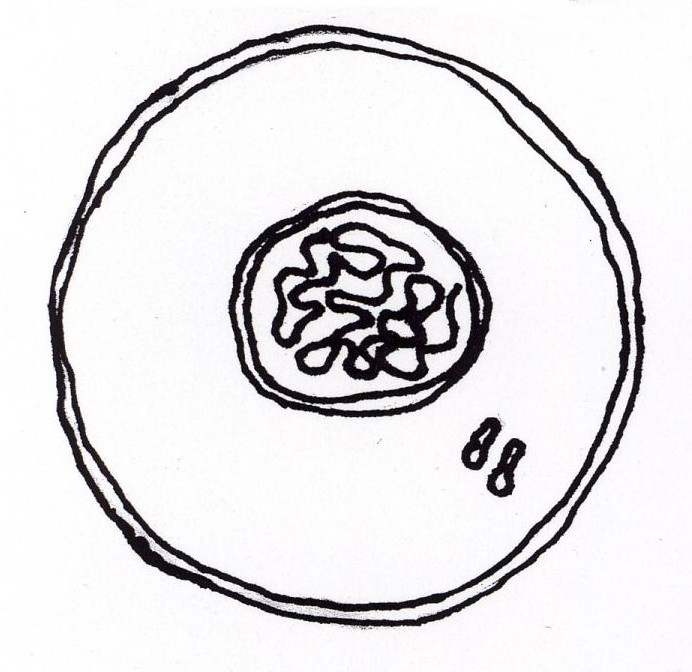
Know that the first phase of meiosis is prophase I. There is something that happens, during this phase, that is important to understand. During this prophase I, the chromatin condenses into chromosomes and the male and female pairs of chromosomes pair up to form tetrads. The root word tetra means four. A tetrad consists of two pairs of homologous chromosomes joined by a centromere. Homologous chromosomes are chromosomes that have the same genes, however the chromosomes may have different variations (alleles) of the genes. One important process that takes place during prophase I is "crossing over;" the exchanging of genetic material that occurs when two homologous chromosomes cross over each other and exchange genetic material. The word chromosome means "colored body," because the chromosomes take up the stain used to prepare cells for study under the microscope and are seen as distinct units, during prophase I.
The number of chromosomes found in the body cells of every member of a species is known as the diploid (2N) number of chromosomes. If the number of chromosomes in the parent cell is 12, the number of chromosomes in the sperm cell of the same organism will be 6. A zygote is formed when a haploid sperm fuses with a haploid egg to form a cell with the diploid, or same number of chromosomes as the parent cell.
It is also important to know that meiosis provides genetic variation in an organism's offspring. This is because each gamete has a different combination of chromosomes from independent assortment during meiosis. Also, the crossing over of chromosomes in prophase I shuffles the genes, so that the resulting germ cells are different and unique. The other phases of meiosis are metaphase I, anaphase I, telophase I, prophase II, metaphase II, anaphase II, and telophase II. Drawing the phases, describing what is happening during each phase, and labeling the cell structures and chromosomes helps one to study and become familiar with what is happening, step-by-step, during meiosis.