Friday, March 22, 2013


Tuesday, February 26, 2013
Tuesday, December 04, 2012
Free Online Biology Textbook - CK-12 Biology Flexbook
Need a textbook to help you study? A free online textbook can be found here:
http://www.ck12.org/flexbook/book/2537
CK-12 Biology is a high school FlexBook covering cell biology, genetics, evolution, ecology, microorganisms, fungi, plants, invertebrates, vertebrates, and physiology.
This book is available for download on your iPad with iBooks or on your computer with iTunes - FOR FREE!
http://www.ck12.org/flexbook/book/2537
CK-12 Biology is a high school FlexBook covering cell biology, genetics, evolution, ecology, microorganisms, fungi, plants, invertebrates, vertebrates, and physiology.
This book is available for download on your iPad with iBooks or on your computer with iTunes - FOR FREE!
Saturday, December 01, 2012
Saturday, October 27, 2012
A whale with a distinctly human-like voice
A whale with a distinctly human-like voice
Blue Whale Song
http://www.youtube.com/watch?v=UStjSuhBBnY
Whale Song
http://www.youtube.com/watch?v=vPPjS4uMwtw
A whole lot more information about whales and whale evolution can be found on this post:
http://cavalierscience.blogspot.com/2009/02/whale-evolution-multimedia.html
Blue Whale Song
http://www.youtube.com/watch?v=UStjSuhBBnY
Whale Song
http://www.youtube.com/watch?v=vPPjS4uMwtw
A whole lot more information about whales and whale evolution can be found on this post:
http://cavalierscience.blogspot.com/2009/02/whale-evolution-multimedia.html
Thursday, September 20, 2012
Khoe-San peoples diverged before 'out-of-Africa' migration of modern humans
Khoe-San peoples diverged before 'out-of-Africa' migration of modern humans
"The largest genomic study ever conducted among Khoe and San groups reveals that these groups from southern Africa are descendants of the earliest diversification event in the history of all humans -- some 100,000 years ago, well before the 'out-of-Africa' migration of modern humans."
"The largest genomic study ever conducted among Khoe and San groups reveals that these groups from southern Africa are descendants of the earliest diversification event in the history of all humans -- some 100,000 years ago, well before the 'out-of-Africa' migration of modern humans."
Thursday, August 16, 2012
Evolution, Dinosaurs and Their Living Descendants, the Birds
Some of the latest findings can be found in the December 2010 issue of the Smithsonian and on the web:
http://www.smithsonianmag.com/science-nature/Dinosaurs-Living-Descendants.html
http://www.smithsonianmag.com/science-nature/Dinosaurs-Living-Descendants.html
Wednesday, August 24, 2011
Virginia earthquake waves ripple across the US!
Virginia earthquake waves ripple across the US!
A really cool video of the up and down movement of the August 23, 2011 earthquake.
A really cool video of the up and down movement of the August 23, 2011 earthquake.
Friday, July 22, 2011
Professional Ethics and Values in Biology and Ecology
A Question of Values
Here is a review that I have written:
_________________________________________________________________________________
Errington, Paul L. 1987. A Question of Values. Iowa State University Press, Ames. ix + 196 p. $18.95. Edited by Carolyn Errington.
_________________________________________________________________________________
This book is a selection of 15 essays written by Dr. Paul L. Errington, renowned for his influential views in the field of wildlife management and conservation. The first three essays discuss predation and factors determining population levels of prey species. Next, four essays describe the cyclic nature of the "terms in a biotic equation" of marsh habitats and the populations supported by these habitats. Five essays tell of the author's experiences in the wilderness of northern Minnesota and Canada with special reference to wolves. These give the reader insight into the personal life of the author and a feel for the outdoor work environment. The next two essays discuss conservation. This is where the central underlying theme of a "question of values" is raised. The last essay is a discourse on what an enlightened civilization might be able to learn from studies of animal populations. Taken all together, the essays revolve around a challenging speculation. If the environment has qualities of value recognized by diverse interests, which values are to be included in decisions about management? In addition, the maturity of the reasoning used to make decisions must be examined. Included at the end of the book is "In Appreciation of Aldo Leopold," as well as, "An Iowa Boyhood," and a dedication to Dr. Arthur Karr Gilkey. The bibliography contains a complete listing of Dr. Errington's publications: 214 books, journal articles, and reviews. There is also a list of 10 biographical citations.
This book will provide excellent supplemental reading for students of wildlife management, ecology, mammalogy, conservation, and those interested in the philosophy of values. Researchers engaged in current ecological research will not find any new ideas, or explanations proposed, however, the narrative is descriptive and complete enough to point out areas where fundamental questions have not yet been answered.
By using examples of his own experiences, Dr. Errington elucidates differences in reasoning between the public attitude concerning outdoor values and the studies of ecologists. Predator-prey patterns in relationship to environmental quality, habitat availability, and behavior are discussed. He points out that the studies of ecologists have led to standards of conduct, judgement, and philosophy. He boldly states that:
"Recognizing that there have to be compromises, I should say that a civilized attitude would be to try to preserve a good deal of Nature in as natural condition as we can, if only for the sake of our own mental health. From our own selfish standpoints, the good life needs more than man and the man-made. To at least some civilized people, opportunities to enjoy and to reflect in the natural out-of-doors are as important as material comforts."
Dr. Errington also asks that professionals, as well as the public, examine the maturity of their thinking and decisions. "Reputable bird students have been among those who have outdone themselves in applying epithets to the horned owl, and we read of voraciousness, bloodthirstiness, blazing eyes, untamable savagery, and other attributes that are considered unattractive in wild animals. These words may be applied to man, who coins such terms, but not to wild animals, acting under the compulsions of their natural way of life." He also points out mistakes in management practices, such as cleaning up areas that should have been left alone, advocating control of native vertebrates, and campaigning against predatory species. He attributes these mistakes to decisions based on faulty ideas, even when there has been adequate study.
Iowa State University Press and Mrs. Errington are to be commended on the quality of the printing and editing. Not only is the book thought provoking, it is also pleasing to the senses and an inspiration to those working in the field.
Here is a STEM Lesson on Gray Wolves in the Northern Rocky Mountains:
Wednesday, July 13, 2011
DNA Paper Model 2010- 2011

DNA_3_2010_11
Originally uploaded by sneakerdoggy
If you are looking for the patterns and some pictures for the paper DNA model, please look at my April 8, 2007 posts! Starting with:
http://cavalierscience.blogspot.com/2007/04/how-to-make-paper-model-of-dna.html
http://cavalierscience.blogspot.com/2007/04/cut-out-pattern-for-making-paper-model_08.html
http://cavalierscience.blogspot.com/2007/04/cut-out-pattern-for-making-paper-model.html
They include the directions and templates for making the model.
Wednesday, June 29, 2011
Friday, June 17, 2011
Research Papers and Mathematics Format - Equation Editor - Graphing and Lab Reports
Free download of equation editor. This editor is simple to use. This editor has good illustrative examples. The editor does not perform mathematical calculations. The resulting equations are easily transferred to Microsoft Word documents.
MathCast
http://sourceforge.net/projects/mathcast/
I am starting a collection of websites here for creating and printing graphs that can be used in research papers and lab reports. My students have been assigned to write a typed formal lab report based on the natural selection simulation activity, Survival in the Bean Patch.
http://nces.ed.gov/nceskids/createagraph/default.aspx
http://www.chartgo.com/
http://www.mathwarehouse.com/charts/
Here is a cartoon presentation of how the process of natural selection/evolution can work:
http://evolution.berkeley.edu/evolibrary/article/sneakermales_01
MathCast
http://sourceforge.net/projects/mathcast/
I am starting a collection of websites here for creating and printing graphs that can be used in research papers and lab reports. My students have been assigned to write a typed formal lab report based on the natural selection simulation activity, Survival in the Bean Patch.
http://nces.ed.gov/nceskids/createagraph/default.aspx
http://www.chartgo.com/
http://www.mathwarehouse.com/charts/
Here is a cartoon presentation of how the process of natural selection/evolution can work:
http://evolution.berkeley.edu/evolibrary/article/sneakermales_01
Saturday, March 19, 2011
Protein Synthesis Board Game Project Activity

Objective:
You are to create a board game that illustrates the process of protein synthesis. The objective of the game is to help you, and anyone who plays the game, to become more familiar with the over-all process of protein synthesis; the chemical nature of nucleic acids; and the roles of DNA, mRNA, tRNA, amino acids in the synthesis of proteins.
Restrictions:
• The game can be of any sort (card game, board game, computer game, etc.) but it must
conform to the rubric provided on the back of these instructions, otherwise it will not be
graded.
Instructions:
• This is not a group project.
• Each person choosing to do this project must submit a typed complete set of rules for the game and include all materials, any game boards, game pieces, and game cards, etc.
• The game rules must include an objective for the game (how is the winner determined), a list of materials provided as part of the game, and any other items not provided with the game such as paper, pencils, etc. There must be a complete set of step-by-step instructions on how the game is to be played. In addition, the game must include a brief statement explaining how the game helps to either test a players knowledge, or helps a player learn more about protein synthesis. You may also incorporate the topics of mutations and cancer into your game, even though they are not required.
Time line:
• This assignment is due on Friday, March 25th.
• NO LATE PROJECTS WILL BE ACCEPTED. If you come to class on March 25th without a project, you will take the Chapter 12 exam.
Grading:
The grade for this project will be based upon the rubric.
• The grade for the physical game is based upon the rubric and will be worth the same points and percentage as the Chapter 12 exam.
• You cannot do both a project and the Chapter 12 exam, so put some thought into your choice to either do a project, or take the exam. The content in Chapter 12, as well as topics of mutations, and cancer will be on the exam.
The rubric can be found at this link:
http://rubistar.4teachers.org/index.php?screen=ShowRubric&module=Rubistar&rubric_id=2029650&
Thursday, March 10, 2011
Why is Evolution Important Now? Battling the Bedbug Epidemic and Cockroach avoidance of bait - Pesticide Resistance
Understanding evolution is a key to understanding pesticide resistance.
http://pubs.acs.org/cen/coverstory/89/8910cover.html
Please read my previous posts on this topic to learn how knowledge of the process of evolution is used to solve modern day problems.
Here is a National Geographic bed bug video: http://www.youtube.com/watch?v=WfKCcSPCOQo
A Natural fungus (biopesticide) may be effective in controlling bed bugs:
http://www.eurekalert.org/pub_releases/2012-11/ps-nfm112012.php
Cockroaches have shown to quickly evolve an avoidance of sweet tasting bait: http://www.sciencedaily.com/releases/2013/05/130523142959.htm
http://www.newsdaily.com/article/c35e4e60019c1b78eb557f0be44c700e/cockroaches-quickly-lose-sweet-tooth--to-survive
For more reasons to understand evolution, the following posts also address the question: Why is Evolution Important Now?
For more reasons to understand evolution, the following posts also address the question: Why is Evolution Important Now?
Why Is Evolution Important Now? Understanding Extinction and Our Environment
http://cavalierscience.blogspot.com/2009/03/why-is-evolution-important-now.html
Why Is Evolution Important Now? Disease Prevention
http://cavalierscience.blogspot.com/2009/02/why-is-evolution-important-now-disease.html
Why Is Evolution Important Now? Antibiotic Resistance
http://cavalierscience.blogspot.com/2009/02/why-is-evolutions-important-now.html
Why Is Evolution Important Now? Understanding Diseases and Food Production
http://cavalierscience.blogspot.com/2009/02/why-is-evolution-important-now.html
Why Is Evolution Important Now? Understanding Predation
http://cavalierscience.blogspot.com/2010/07/why-is-evolution-important-now.html
Why Is Evolution Important Now? Invasive Species
http://cavalierscience.blogspot.com/2013/05/why-is-understanding-evolution.html
http://pubs.acs.org/cen/coverstory/89/8910cover.html
Please read my previous posts on this topic to learn how knowledge of the process of evolution is used to solve modern day problems.
Here is a National Geographic bed bug video: http://www.youtube.com/watch?v=WfKCcSPCOQo
A Natural fungus (biopesticide) may be effective in controlling bed bugs:
http://www.eurekalert.org/pub_releases/2012-11/ps-nfm112012.php
Cockroaches have shown to quickly evolve an avoidance of sweet tasting bait: http://www.sciencedaily.com/releases/2013/05/130523142959.htm
http://www.newsdaily.com/article/c35e4e60019c1b78eb557f0be44c700e/cockroaches-quickly-lose-sweet-tooth--to-survive
For more reasons to understand evolution, the following posts also address the question: Why is Evolution Important Now?
For more reasons to understand evolution, the following posts also address the question: Why is Evolution Important Now?
Why Is Evolution Important Now? Understanding Extinction and Our Environment
http://cavalierscience.blogspot.com/2009/03/why-is-evolution-important-now.html
Why Is Evolution Important Now? Disease Prevention
http://cavalierscience.blogspot.com/2009/02/why-is-evolution-important-now-disease.html
Why Is Evolution Important Now? Antibiotic Resistance
http://cavalierscience.blogspot.com/2009/02/why-is-evolutions-important-now.html
Why Is Evolution Important Now? Understanding Diseases and Food Production
http://cavalierscience.blogspot.com/2009/02/why-is-evolution-important-now.html
Why Is Evolution Important Now? Understanding Predation
http://cavalierscience.blogspot.com/2010/07/why-is-evolution-important-now.html
Why Is Evolution Important Now? Invasive Species
http://cavalierscience.blogspot.com/2013/05/why-is-understanding-evolution.html
Friday, December 03, 2010
Why Is Evolution Important Now? Understanding Predator Prey Relationships
Natural Selection has resulted in a fascinating relationship between a toxic newt and a garter snake.
http://www.sciencedaily.com/releases/2005/04/050411095753.htm
What is Natural Selection? and Why is the relationship between the toxic newts and the garter snakes considered an evolutionary arms race? Watch a video called Toxic Newts that can be found at this link:
http://www.pbs.org/wgbh/evolution/library/01/3/l_013_07.html
For the orginal scientific publications on this subject, visit this web site:
http://faculty.virginia.edu/brodie/pubs.html
Here is a STEM lesson on Gray Wolves in the Northern Rocky Mountains:
Here is a STEM Lesson on Gray Wolves in the Northern Rocky Mountains:
https://beartrust.org/gray-wolves-in-the-northern-rockies
For more reasons to understand evolution, the following posts also address the question: Why is Evolution Important Now?
Why Is Evolution Important Now? Understanding Extinction and Our Environment
http://cavalierscience.blogspot.com/2009/03/why-is-evolution-important-now.html
Why Is Evolution Important Now? Disease Prevention
http://cavalierscience.blogspot.com/2009/02/why-is-evolution-important-now-disease.html
Why Is Evolution Important Now? Antibiotic Resistance
http://cavalierscience.blogspot.com/2009/02/why-is-evolutions-important-now.html
Why Is Evolution Important Now? Understanding Diseases and Food Production
http://cavalierscience.blogspot.com/2009/02/why-is-evolution-important-now.html
Why Is Evolution Important Now? Understanding Predation
http://cavalierscience.blogspot.com/2010/07/why-is-evolution-important-now.html
Why Is Evolution Important Now? Battling the Bedbug Epidemic and Cockroach avoidance of bait - Pesticide Resistance
http://cavalierscience.blogspot.com/2011/03/why-is-evolution-important-now-battling.html
Why Is Evolution Important Now? Invasive Species
http://cavalierscience.blogspot.com/2013/05/why-is-understanding-evolution.html
http://www.sciencedaily.com/releases/2005/04/050411095753.htm
What is Natural Selection? and Why is the relationship between the toxic newts and the garter snakes considered an evolutionary arms race? Watch a video called Toxic Newts that can be found at this link:
http://www.pbs.org/wgbh/evolution/library/01/3/l_013_07.html
For the orginal scientific publications on this subject, visit this web site:
http://faculty.virginia.edu/brodie/pubs.html
Here is a STEM lesson on Gray Wolves in the Northern Rocky Mountains:
Here is a STEM Lesson on Gray Wolves in the Northern Rocky Mountains:
https://beartrust.org/gray-wolves-in-the-northern-rockies
For more reasons to understand evolution, the following posts also address the question: Why is Evolution Important Now?
Why Is Evolution Important Now? Understanding Extinction and Our Environment
http://cavalierscience.blogspot.com/2009/03/why-is-evolution-important-now.html
Why Is Evolution Important Now? Disease Prevention
http://cavalierscience.blogspot.com/2009/02/why-is-evolution-important-now-disease.html
Why Is Evolution Important Now? Antibiotic Resistance
http://cavalierscience.blogspot.com/2009/02/why-is-evolutions-important-now.html
Why Is Evolution Important Now? Understanding Diseases and Food Production
http://cavalierscience.blogspot.com/2009/02/why-is-evolution-important-now.html
Why Is Evolution Important Now? Understanding Predation
http://cavalierscience.blogspot.com/2010/07/why-is-evolution-important-now.html
Why Is Evolution Important Now? Battling the Bedbug Epidemic and Cockroach avoidance of bait - Pesticide Resistance
http://cavalierscience.blogspot.com/2011/03/why-is-evolution-important-now-battling.html
Why Is Evolution Important Now? Invasive Species
http://cavalierscience.blogspot.com/2013/05/why-is-understanding-evolution.html
Friday, August 13, 2010
The Life Cyle of the Jelly Fish "Box Jelly" - Graphic Organizer - Storyboarding Example
I use storyboarding to teach the processes of protein synthesis, photosynthesis, and cellular respiration. I introduce my students to the concept of storyboarding by showing them this American Film Institute video, which can be found at either of these web sites:
http://www.youtube.com/watch?v=pWPjjoOFIu8
http://www.afi.com/education/screened/demo/screened_tables_student.aspx
However, the above links have now become unavailable. I'm leaving them in there for reference.
But I found another website that has the video!!! https://app.schooltube.com/video/d2525f42fd3809f3dabd/Storyboarding%20(AFI's%20Lights,%20Camera,%20Education!)
I did find a website with a video about storyboarding on this website, even though it is not nearly as good as the original, I does give students ideas about drawing out stories as pictures or cartoons.
http://uwsslec.libguides.com/c.php?g=187016&p=1236350
For the storyboarding graphic organizers you may visit my previous posts:
http://cavalierscience.blogspot.com/2010/06/protein-synthesis-graphic-organizer.html
http://cavalierscience.blogspot.com/2010/06/cellular-respiration-graphic-organizer.html
http://cavalierscience.blogspot.com/2010/06/photosynthesis-calvin-cycle-graphic.html
http://cavalierscience.blogspot.com/2010/06/photosynthesis-light-reactions-graphic.html
Here is an example of a storyboard for the Life Cycle of the "Box Jelly" Jelly Fish:

Here are some examples of books that utilize graphics to teach:
http://www.powells.com/book/manga-guide-to-molecular-biology-9781593272029/2-2
Also, Larry Gonick's cartoon guides are fun and informative:
http://www.powells.com/SearchResults?kw=title:larry%20gonick
If you find links in my blog that do not work, please let me know by submitting a comment. I would like to keep everything up-to-date and relevant.
http://www.youtube.com/watch?v=pWPjjoOFIu8
http://www.afi.com/education/screened/demo/screened_tables_student.aspx
However, the above links have now become unavailable. I'm leaving them in there for reference.
But I found another website that has the video!!! https://app.schooltube.com/video/d2525f42fd3809f3dabd/Storyboarding%20(AFI's%20Lights,%20Camera,%20Education!)
I did find a website with a video about storyboarding on this website, even though it is not nearly as good as the original, I does give students ideas about drawing out stories as pictures or cartoons.
http://uwsslec.libguides.com/c.php?g=187016&p=1236350
For the storyboarding graphic organizers you may visit my previous posts:
http://cavalierscience.blogspot.com/2010/06/protein-synthesis-graphic-organizer.html
http://cavalierscience.blogspot.com/2010/06/cellular-respiration-graphic-organizer.html
http://cavalierscience.blogspot.com/2010/06/photosynthesis-calvin-cycle-graphic.html
http://cavalierscience.blogspot.com/2010/06/photosynthesis-light-reactions-graphic.html
Here is an example of a storyboard for the Life Cycle of the "Box Jelly" Jelly Fish:

Here are some examples of books that utilize graphics to teach:
http://www.powells.com/book/manga-guide-to-molecular-biology-9781593272029/2-2
Also, Larry Gonick's cartoon guides are fun and informative:
http://www.powells.com/SearchResults?kw=title:larry%20gonick
If you find links in my blog that do not work, please let me know by submitting a comment. I would like to keep everything up-to-date and relevant.
Wednesday, July 07, 2010
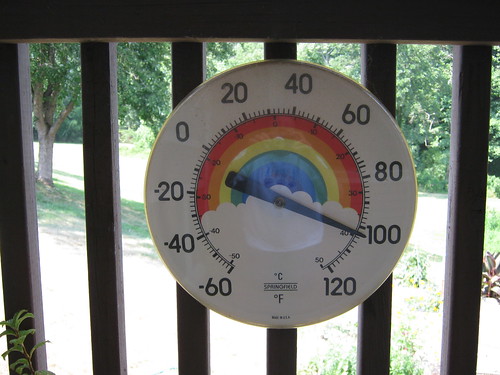
Delaware Record Summer Heat -103 degrees 070610
Originally uploaded by sneakerdoggy
A photo-record of a very hot day, July 6, 2010, in New Castle County, Wilmington, Delaware. The thermometer reads 103 degrees and this matches the official high as recorded as the airport. A high temperature record was also broken for July 7, when the high temperature was again 103 degrees. The airport recorded it as 101 degrees. This record is mentioned in an article about heat waves in wikipedia:
http://en.wikipedia.org/wiki/Heat_wave
https://en.wikipedia.org/wiki/List_of_heat_waves
Interested in weather? Here's book that I enjoy reading:
http://www.powells.com/book/weather-a-guide-to-phenomena-forecasts-golden-2221199413598/1-3
If you find any links on my blog that are not working, please let me know by making a comment, so that I can fix or eliminate the bad links.
https://en.wikipedia.org/wiki/List_of_heat_waves
Interested in weather? Here's book that I enjoy reading:
http://www.powells.com/book/weather-a-guide-to-phenomena-forecasts-golden-2221199413598/1-3
If you find any links on my blog that are not working, please let me know by making a comment, so that I can fix or eliminate the bad links.
Saturday, July 03, 2010
Why Is Evolution Important Now? Understanding Predation
Why Is Evolution Important Now? Understanding why some chili peppers are hot and some are not
http://www.sciencedaily.com/releases/2008/08/080811195315.htm
University of Washington (2008, August 12). Bugs Put The Heat In Chili Peppers. ScienceDaily. Retrieved July 2, 2010, from http://www.sciencedaily.com/releases/2008/08/080811195315.htm
Name _______________________________ Period _______________
Note-taking Worksheet
Chili peppers have these predators:
__________________
__________________
__________________
__________________
Predators are attracted to and eat peppers because of these biochemicals:
__________________
__________________
This is the predator that helps disperse the pepper seeds:
__________________
This is the predator that kills the pepper seeds:
__________________
Chili peppers produce this biochemical as a defense against attack of a microbe predator:
__________________
This predator does not sense and is not harmed by eating capsaicin:
__________________
This predator is inhibited by capsaicin:
__________________
These predators can sense “heat” of the capsaicin, but still eat the peppers without being harmed:
__________________
Hot peppers are most often found growing in areas with larger populations of:
__________________
When you have filled in all the blanks in the note-taking worksheet, you can design a concept map, or chart that contains the important facts about the peppers and bugs being part of an evolutionary arms race within a food web.
This video clip shows another predator-prey evolutionary arms race that is demonstrated by the relationships between garter snakes and toxic newts:
http://www.pbs.org/wgbh/evolution/library/01/3/l_013_07.html
Here is a STEM Lesson on Gray Wolves in the Northern Rocky Mountains:
https://beartrust.org/gray-wolves-in-the-northern-rockies
The following posts also address the question: Why is Evolution Important Now?
Why Is Evolution Important Now? Understanding Extinction and Our Environment
http://cavalierscience.blogspot.com/2009/03/why-is-evolution-important-now.html
Why Is Evolution Important Now? Disease Prevention
http://cavalierscience.blogspot.com/2009/02/why-is-evolution-important-now-disease.html
Why Is Evolution Important Now? Antibiotic Resistance
http://cavalierscience.blogspot.com/2009/02/why-is-evolutions-important-now.html
Why Is Evolution Important Now? Understanding Diseases and Food Production
http://cavalierscience.blogspot.com/2009/02/why-is-evolution-important-now.html
The Human Environment (McGraw-Hill series in population biology)
Why Is Evolution Important Now? Battling the Bedbug Epidemic and Cockroach avoidance of bait - Pesticide Resistance
http://cavalierscience.blogspot.com/2011/03/why-is-evolution-important-now-battling.html
http://www.sciencedaily.com/releases/2008/08/080811195315.htm
WHY IS EVOLUTION IMPORTANT NOW? Understanding Predator-Prey Relationships – An Evolutionary Arms Race
Read the following article: University of Washington (2008, August 12). Bugs Put The Heat In Chili Peppers. ScienceDaily. Retrieved July 2, 2010, from http://www.sciencedaily.com/releases/2008/08/080811195315.htm
Name _______________________________ Period _______________
Note-taking Worksheet
Chili peppers have these predators:
__________________
__________________
__________________
__________________
Predators are attracted to and eat peppers because of these biochemicals:
__________________
__________________
This is the predator that helps disperse the pepper seeds:
__________________
This is the predator that kills the pepper seeds:
__________________
Chili peppers produce this biochemical as a defense against attack of a microbe predator:
__________________
This predator does not sense and is not harmed by eating capsaicin:
__________________
This predator is inhibited by capsaicin:
__________________
These predators can sense “heat” of the capsaicin, but still eat the peppers without being harmed:
__________________
Hot peppers are most often found growing in areas with larger populations of:
__________________
When you have filled in all the blanks in the note-taking worksheet, you can design a concept map, or chart that contains the important facts about the peppers and bugs being part of an evolutionary arms race within a food web.
This video clip shows another predator-prey evolutionary arms race that is demonstrated by the relationships between garter snakes and toxic newts:
http://www.pbs.org/wgbh/evolution/library/01/3/l_013_07.html
Here is a STEM Lesson on Gray Wolves in the Northern Rocky Mountains:
https://beartrust.org/gray-wolves-in-the-northern-rockies
The following posts also address the question: Why is Evolution Important Now?
Why Is Evolution Important Now? Understanding Extinction and Our Environment
http://cavalierscience.blogspot.com/2009/03/why-is-evolution-important-now.html
Why Is Evolution Important Now? Disease Prevention
http://cavalierscience.blogspot.com/2009/02/why-is-evolution-important-now-disease.html
Why Is Evolution Important Now? Antibiotic Resistance
http://cavalierscience.blogspot.com/2009/02/why-is-evolutions-important-now.html
Why Is Evolution Important Now? Understanding Diseases and Food Production
http://cavalierscience.blogspot.com/2009/02/why-is-evolution-important-now.html
The Human Environment (McGraw-Hill series in population biology)
Why Is Evolution Important Now? Battling the Bedbug Epidemic and Cockroach avoidance of bait - Pesticide Resistance
http://cavalierscience.blogspot.com/2011/03/why-is-evolution-important-now-battling.html
Thursday, July 01, 2010
Longevity Genes Found; Predict Chances of Reaching 100
http://www.sciencedaily.com/releases/2010/07/100701145521.htm
Here are two other posts, which might be of interest:
http://cavalierscience.blogspot.com/2009/03/gattaca-movie-and-designer-babies.html
http://cavalierscience.blogspot.com/2009/03/watching-movie-gattaca.html
Friday, June 25, 2010
Paper Model of DNA - 2009-2010
If you are looking for the patterns and some pictures for the paper DNA model, please look at my April 8, 2007 posts! Starting with:
http://cavalierscience.blogspot.com/2007/04/how-to-make-paper-model-of-dna.html
http://cavalierscience.blogspot.com/2007/04/cut-out-pattern-for-making-paper-model_08.html
http://cavalierscience.blogspot.com/2007/04/cut-out-pattern-for-making-paper-model.html
They include the directions and templates for making the model.
Here are the pictures of the DNA model that was made by my students for the school year 2009-2010. The sections of blue and gold DNA were the result of instruction by my student teachers from the University of Delaware and are the school's colors.


Subscribe to:
Posts (Atom)